



Cloud Load Balancer
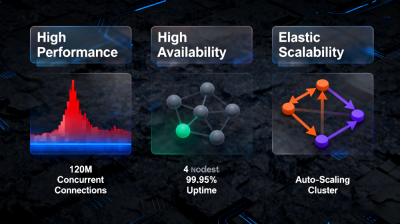
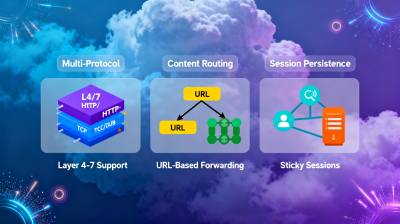
2025-12-11 16:04Cloud Load Balancer (CLB) provides secure and efficient Layer 4 and Layer 7 traffic distribution services. It supports billions of connections, enabling effortless handling of high-traffic access scenarios. Gateway Load Balancer (GWLB) operates at the network layer. Through GWLB, customers can deploy, scale, and manage third-party virtual appliances with simple operations and strong security. Cloud Load Balancer (CLB) features Multi-protocol Forwarding as its core capability, comprehensively supporting mainstream protocols such as TCP, UDP, HTTP, and HTTPS. This allows flexible adaptation to the traffic needs of different business scenarios like web services, database access, and video transmission. Its Content-based Routing characteristic enables precise traffic distribution based on request URL, domain name, HTTP headers, and other content, achieving refined business scheduling and resource optimization. In terms of security protection, Cloud Load Balancer (CLB) integrates professional DDoS Defense capabilities, effectively resisting various distributed denial-of-service attacks and ensuring stable transmission of business traffic. Simultaneously, the product is deeply optimized for Hybrid Cloud Scenarios, supporting the integration of on-premises data centers and cloud nodes into a unified scheduling system to achieve seamless cross-environment traffic distribution and resource coordination. Whether for high-availability deployment of enterprise applications, elastic scaling of internet services, or cross-environment collaboration in Hybrid Cloud Scenarios, Cloud Load Balancer (CLB) can provide end-to-end assurance for business traffic scheduling through the compatibility of Multi-protocol Forwarding, the precision of Content-based Routing, and the security of DDoS Defense.
Frequently Asked Questions
Q: How do Tencent Cloud Load Balancer (CLB)'s Multi-protocol Forwarding and Content-based Routing functions work together to enhance business scheduling efficiency?
A: These two functions of Cloud Load Balancer (CLB) form a synergistic system of "broad spectrum adaptation + precise scheduling," significantly improving business efficiency. The Multi-protocol Forwarding function provides foundational adaptation for different types of businesses. Whether it's HTTP/HTTPS traffic for web services or TCP traffic for databases, it can all be uniformly distributed through Cloud Load Balancer (CLB), avoiding the complex deployment of multiple scheduling systems. Content-based Routing, building upon Multi-protocol Forwarding, enables precise traffic splitting. For example, it can direct traffic from different business lines to corresponding backend nodes based on the request domain name, or route static resource requests to caching nodes via URL routing, reducing inefficient forwarding. This collaborative model is particularly practical in Hybrid Cloud Scenarios, enabling precise scheduling of multi-protocol traffic across cloud and on-premises environments. Simultaneously, it works in conjunction with DDoS Defense capabilities to ensure that various protocol traffic not only transmits securely but also obtains optimal scheduling paths.
Q: In Hybrid Cloud Scenarios, what core pain points can Tencent Cloud Load Balancer (CLB)'s DDoS Defense and Multi-protocol Forwarding capabilities solve?
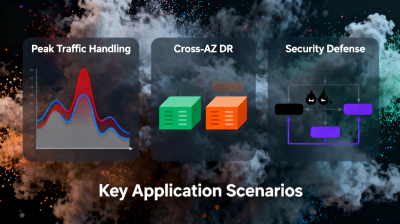
A: In Hybrid Cloud Scenarios, these two capabilities precisely address the core pain points of cross-environment traffic security and compatibility. In Hybrid Cloud Scenarios, traffic communication between on-premises and cloud nodes faces increased security risks. The DDoS Defense capability of Cloud Load Balancer (CLB) can serve as a security barrier at the traffic ingress, defending against malicious attacks during cross-environment transmission and ensuring the stable operation of both on-premises and cloud-based services. The Multi-protocol Forwarding function addresses protocol disparity issues among different environments and businesses within the hybrid cloud architecture. It supports unified ingestion of various protocol traffic into Cloud Load Balancer (CLB), which is then distributed to corresponding backend nodes, eliminating the need to configure separate protocol adaptation rules for different environments. Furthermore, combined with the precise scheduling of Content-based Routing, it can further optimize traffic paths in Hybrid Cloud Scenarios, making cross-environment traffic distribution both secure and efficient.
Q: What advantages does Tencent Cloud Load Balancer (CLB)'s Content-based Routing function possess when dealing with complex business scenarios?
A: The Content-based Routing function is a core advantage of Cloud Load Balancer (CLB) for handling complex business scenarios, primarily reflected in its flexibility and specificity. First, it supports routing rule configuration based on multiple dimensions such as domain name, URL, and HTTP headers, adapting to complex scenarios like multiple coexisting businesses or multi-version deployments. For instance, during major e-commerce promotions, core traffic like order placement and payment can be directed to high-performance nodes via URL routing, while static resource traffic is directed to standard nodes. Second, Content-based Routing can be deeply integrated with Multi-protocol Forwarding, implementing differentiated routing strategies across different protocol traffic streams. For example, TCP protocol traffic can be distributed based on IP hash, while HTTPS protocol traffic can be split based on content characteristics. This advantage is also prominent in Hybrid Cloud Scenarios, enabling content-based precise scheduling across cloud and on-premises environments. Coupled with DDoS Defense capabilities, it ensures that traffic scheduling in complex business scenarios is both precise and secure, fully realizing the collaborative value of Cloud Load Balancer (CLB).