


- Home
- >
- Cloud & AI
- >
- Control Center
- >
Control Center
2025-12-12 17:57Tencent Cloud Control Center is a cloud management hub designed for medium and large enterprises, with its core value lying in providing a full lifecycle solution—from account planning to resource control—to help enterprises achieve standardized and regulated operations in the cloud. The product is built on the foundational support of Landing Zone Deployment, enabling rapid construction of secure and compliant enterprise-grade cloud environments through pre-configured industry-specific cloud architecture templates. This perfectly aligns with the need for Enterprise Account Unified Planning, allowing scattered enterprise accounts to be systematically organized and integrated across dimensions such as business departments and subsidiaries. In terms of core capabilities, Control Center supports Centralized Access Permission Configuration, leveraging Tencent Cloud CAM services to achieve unified allocation and control of cross-account permissions, preventing permission misuse. Additionally, it focuses on Cloud Environment Security & Compliance Construction, integrating capabilities such as security auditing and risk inspection to comprehensively ensure the security and compliance of cloud operations and resources. Furthermore, as a core tool for enterprise cloud cost management, its Centralized Cloud Cost Management feature enables unified measurement, allocation, and optimization recommendations for multi-account costs, helping enterprises reduce expenses and improve efficiency. Landing Zone Deployment establishes a standardized foundation, Enterprise Account Unified Planning ensures orderly account governance, and the synergistic efforts of Centralized Access Permission Configuration, Cloud Environment Security & Compliance Construction, and Centralized Cloud Cost Management make enterprise cloud management more efficient, secure, and economical.
Frequently Asked Questions
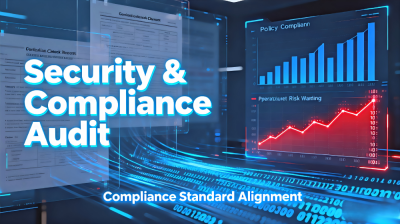
Q: How does Tencent Cloud Control Center support Enterprise Account Unified Planning through Landing Zone Deployment, and what role does Centralized Access Permission Configuration play in this?
A: Tencent Cloud Control Center uses Landing Zone Deployment as its core mechanism to provide robust support for Enterprise Account Unified Planning: Through pre-configured standardized cloud architecture templates for industries such as finance and internet, Landing Zone Deployment enables rapid construction of foundational architectures that include unified networking, security protection, and account systems. Based on these templates, enterprises can systematically integrate scattered accounts into a unified management system according to organizational hierarchies, achieving classification, grouping, and permission inheritance for accounts. This makes Enterprise Account Unified Planning more standardized and efficient. Centralized Access Permission Configuration serves as a critical guarantee for implementing Enterprise Account Unified Planning: Leveraging the hierarchical structure established by Landing Zone Deployment, Control Center can batch distribute CAM policies to assign precise permissions to accounts at different levels with varying responsibilities, achieving centralized configuration of cross-account access permissions. For example, assigning specific resource operation permissions to subsidiary accounts meets business needs while avoiding excessive permission grants. This ensures that the outcomes of Enterprise Account Unified Planning are effectively realized through permission management. Additionally, the standardized architecture of Landing Zone Deployment makes Centralized Access Permission Configuration more regulated and operable.
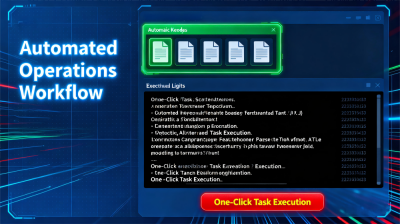
Q: How is the Cloud Environment Security & Compliance Construction capability of Tencent Cloud Control Center specifically reflected, and what are its connections to Landing Zone Deployment and Centralized Cloud Cost Management?
A: The Cloud Environment Security & Compliance Construction capability of Tencent Cloud Control Center spans the entire cloud management lifecycle: On one hand, Landing Zone Deployment pre-configures secure and compliant foundational architectures, including private network isolation, security group rule configuration, and log auditing activation, establishing a security baseline from the outset. On the other hand, it integrates services such as Security Center and CloudAudit to achieve real-time security risk monitoring, automatic alerts for non-compliant operations, and compliance report generation, comprehensively ensuring cloud environment security. This capability is closely linked to Landing Zone Deployment and Centralized Cloud Cost Management: Landing Zone Deployment provides the foundational architectural support for Cloud Environment Security & Compliance Construction, ensuring that security and compliance configurations are implemented during the account and resource initialization phases. Centralized Cloud Cost Management can synergize with security and compliance efforts—for instance, by using cost data analysis to detect abnormal resource expenditures, which can then be investigated for potential unauthorized creation of high-risk resources, achieving dual control over both security and costs. Together, these three elements create a management system of "foundational compliance + real-time protection + cost synergy," making Cloud Environment Security & Compliance Construction more comprehensive and efficient.
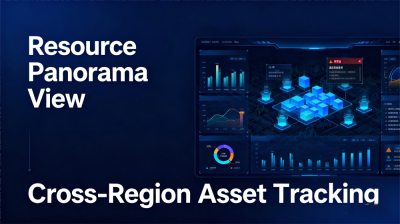
Q: In scenarios of cross-regional business expansion, how do Enterprise Account Unified Planning and Centralized Cloud Cost Management in Tencent Cloud Control Center collaborate, and what support can Landing Zone Deployment and Centralized Access Permission Configuration provide?
A: In cross-regional business expansion scenarios, the collaboration between Enterprise Account Unified Planning and Centralized Cloud Cost Management is crucial: Through Enterprise Account Unified Planning, accounts for cross-regional businesses are categorized and managed by region and business line, ensuring that permissions and resource usage for accounts across regions comply with organizational standards. Centralized Cloud Cost Management enables unified measurement, allocation, and analysis of resource expenditures for accounts in different regions, identifying cost variances and optimization opportunities across regions and providing data support for cross-regional resource scheduling. Landing Zone Deployment and Centralized Access Permission Configuration provide core support for such scenarios: Landing Zone Deployment allows rapid replication of standardized foundational architectures—including networking, security, and account systems—in new regions, ensuring consistency in cross-regional account and resource configurations and significantly shortening the time to launch new regional operations. Centralized Access Permission Configuration can quickly assign region-specific permissions to cross-regional accounts based on unified permission policies, avoiding redundant configurations. Simultaneously, centralized permission management prevents the risk of permission misuse in cross-regional operations. The synergy of these four elements makes account management more orderly, cost control more precise, and security and compliance more assured during enterprise cross-regional business expansion.