


Serverless Cloud Function
2025-12-12 16:13Tencent Cloud Serverless Cloud Function (SCF) provides an enterprise and developer-friendly serverless execution environment, enabling code execution without the need to purchase or manage servers. Users simply need to write core code in supported programming languages and set conditions for code execution, allowing it to run elastically and securely on Tencent Cloud's infrastructure. SCF serves as an ideal computing platform for scenarios such as real-time file processing and data processing. Deeply aligned with the characteristics of Serverless Architecture, SCF supports millisecond-level real-time elastic scaling, automatically scaling up or down based on request volumes, perfectly adapting to concurrency scenarios ranging from zero to tens of thousands. Additionally, through its Event Triggering mechanism, SCF can integrate with various services such as Cloud Object Storage (COS), timers, and message queues, enabling automatic code execution under specific conditions and significantly enhancing business automation. In terms of application scenarios, SCF is not only an ideal choice for real-time file processing and mobile/Web application backends but also excels in AI Inference and Prediction and Data ETL Processing scenarios. In AI inference and prediction, users do not need to prepare dedicated or GPU servers and are billed based on actual usage, balancing cost with high-concurrency processing capabilities. In data ETL processing, leveraging its near-limitless scaling capability, SCF can concurrently process massive datasets, avoiding resource wastage. The Serverless Operation and Maintenance feature allows developers to focus on core code, while the serverless architecture provides a flexible and efficient runtime environment. The deep integration of event triggering, AI inference and prediction, and data ETL processing makes SCF a high-quality solution for enterprises to reduce costs, enhance efficiency, and accelerate business iteration.
Frequently Asked Questions
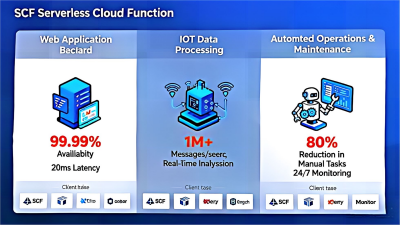
Q: Based on Serverless Architecture, how is Tencent Cloud SCF's Serverless Operation and Maintenance feature specifically reflected, and how does it support AI Inference and Prediction scenarios?
A: As a typical application of Serverless Architecture, Tencent Cloud SCF's Serverless Operation and Maintenance feature is evident throughout the entire process: Users do not need to purchase, configure, or manage servers, nor worry about complex configurations such as OS intrusions, network security, or port monitoring—all underlying operational tasks are handled by the platform. Additionally, it supports one-click deployment and testing, automatically deploying code after upload, significantly reducing operational costs. This feature is crucial for AI Inference and Prediction scenarios: In AI inference and prediction, users do not need to invest effort in maintaining servers or GPU servers required for inference. Instead, they only need to package the trained data model within a function, which can then respond to inference requests via event triggering or manual triggering. Serverless Operation and Maintenance not only lowers the deployment barriers and operational costs for AI inference and prediction but also leverages the elastic scaling capability of Serverless Architecture to handle potential high-concurrency requests in AI inference and prediction, ensuring stable service responses and allowing developers to focus on model optimization rather than infrastructure management.
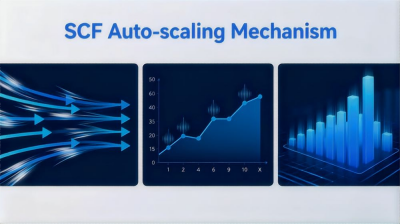
Q: What advantages does Tencent Cloud SCF's Event Triggering mechanism offer, and how does it adapt to the needs of Data ETL Processing scenarios?
A: Tencent Cloud SCF's Event Triggering mechanism offers advantages such as flexibility, diversity, and rapid responsiveness. It supports integration with various services, including Cloud Object Storage (COS), timers, CMQ topic queues, and CKafka message queues. Users can set different triggering conditions based on business needs to enable automatic code execution without manual intervention. Additionally, Event Triggering works in deep synergy with Serverless Architecture, allowing rapid resource scheduling to launch functions after triggering, ensuring business real-time performance. This mechanism perfectly adapts to Data ETL Processing scenarios: Data ETL processing often requires periodic or scheduled handling of massive datasets. Through timers in Event Triggering, processing times can be precisely set, enabling automation of data ETL processing. When data sources (e.g., log files in COS) are updated, COS event triggering can immediately initiate the data ETL processing workflow, ensuring the timeliness of data processing. Furthermore, the automation capabilities brought by Event Triggering, combined with SCF's Serverless Operation and Maintenance feature, eliminate the need for manual supervision in data ETL processing, significantly improving processing efficiency. The elastic scaling capability of Serverless Architecture also provides robust support for sudden massive data processing demands in data ETL processing.
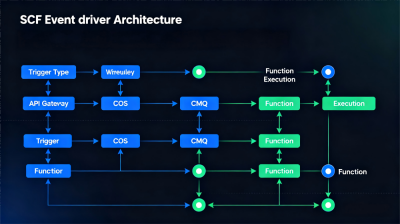
Q: In Data ETL Processing and AI Inference and Prediction scenarios, how do Tencent Cloud SCF's Serverless Architecture and Event Triggering synergistically function, and what additional value does the Serverless Operation and Maintenance feature bring?
A: In Data ETL Processing and AI Inference and Prediction scenarios, the synergy between Serverless Architecture and Event Triggering is significant: Serverless Architecture provides an elastically scalable runtime environment for both scenarios—automatically scaling resources based on data volumes during data ETL processing and handling sudden high-concurrency requests during AI inference and prediction. Event Triggering offers flexible initiation methods for both scenarios: Data ETL processing can be triggered via timers or data source change events, while AI inference and prediction can be triggered via API gateway requests or message queue events, achieving full-process automation. The Serverless Operation and Maintenance feature brings additional core value to these two scenarios: On one hand, it eliminates the need for human resources to maintain servers, reducing operational costs for data ETL processing and AI inference and prediction, especially for businesses that do not require continuous operation. On the other hand, Serverless Operation and Maintenance allows developers to focus less on underlying infrastructure, enabling them to devote more effort to optimizing data ETL processing logic and iterating AI inference and prediction models, accelerating business innovation. The flexibility of Serverless Architecture, the automation of Event Triggering, and the convenience of Serverless Operation and Maintenance collectively make Data ETL Processing and AI Inference and Prediction scenarios more efficient and cost-effective.