



- Home
- >
- Cloud & AI
- >
- Tencent Cloud Mesh
- >
Tencent Cloud Mesh
2025-12-12 17:12Service Mesh (TCM) is a consistent, reliable, and transparent cloud-native application communication network management platform. Fully compatible with Istio and integrated with Tencent Cloud's infrastructure, it provides fully managed, service-oriented support capabilities to ensure the lifecycle management of the mesh. IaaS networking and monitoring components are ready to use out-of-the-box, enabling consistent discovery and management across clusters and heterogeneous applications, accelerating cloud-native migration. With Microservice Governance as its core objective, the service mesh TCM adopts a non-intrusive approach to achieve consistent discovery and management of applications across clusters and heterogeneous environments, significantly accelerating the cloud-native migration process. In terms of core capabilities, the service mesh TCM features robust Traffic Management functionality, supporting both north-south and east-west traffic control. It allows flexible configuration of strategies such as service deployment, rollouts, canary releases, and feature routing. Additionally, it ensures fault tolerance in application communication through mechanisms like retries, timeouts, and rate limiting. In the realm of Microservice Observability, it can non-intrusively collect telemetry data such as metrics, traces, and access logs, supporting multi-level monitoring and end-to-end call tracing, making the operational state of microservices transparent and observable. The architectural advantages of a Cloud-Native Service Mesh, combined with the fully managed capabilities of the service mesh TCM, enable more efficient microservice governance, more flexible traffic management, and more comprehensive microservice observability. This provides solid support for scenarios such as distributed high-availability architectures and security isolation, making it a core enabler for enterprise cloud-native transformation.
Frequently Asked Questions
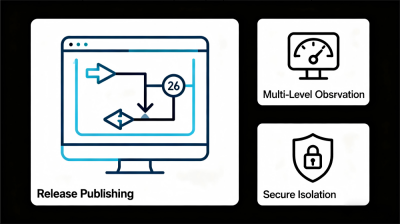
Q: As a typical implementation of a Cloud-Native Service Mesh, what core advantages does the service mesh TCM offer in Microservice Governance, and how does its Traffic Management functionality empower Microservice Governance?
A: The service mesh TCM deeply embodies the design philosophy of a Cloud-Native Service Mesh, offering significant core advantages in Microservice Governance: It enables consistent management across clusters and heterogeneous applications without requiring modifications to business code. It supports the dynamic addition and removal of Kubernetes clusters and the registration of VM-based workloads, complemented by a unified service management dashboard, making the registration, discovery, and configuration management of microservices more efficient. Additionally, its service-based authentication and authorization mechanisms achieve security isolation in containerized environments with dynamic IPs, fortifying the security foundation for microservice governance. Traffic Management is a key enabler for Microservice Governance in the service mesh TCM: Through its north-south and east-west traffic control capabilities, it enables strategies such as canary releases, feature routing, and load balancing at the service and API levels, making microservice version iterations more controllable. Leveraging mechanisms such as health checks, rate limiting, and retries, it effectively ensures the stability of communication between microservices, addressing fault tolerance challenges in microservice governance. Built on the foundation of a Cloud-Native Service Mesh, the service mesh TCM deeply integrates Traffic Management with Microservice Governance, significantly reducing the operational costs of microservices.
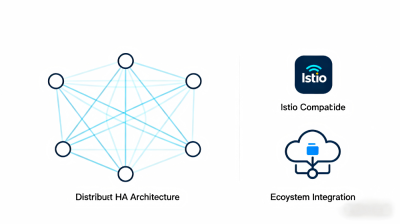
Q: How does the service mesh TCM achieve Microservice Observability, and how does this feature align with the architectural adaptability of a Cloud-Native Service Mesh? What practical value does it bring to Microservice Governance?
A: Based on the non-intrusive architecture of a Cloud-Native Service Mesh, the service mesh TCM achieves comprehensive Microservice Observability: Without modifying business code, it automatically collects telemetry data such as metrics, traces, and access logs during microservice communication. By integrating with products like Cloud Monitor, Prometheus, and Log Service, it provides out-of-the-box observability capabilities, supporting multi-level performance monitoring, end-to-end call tracing, and access behavior auditing. This feature aligns highly with the architecture of a Cloud-Native Service Mesh: The separation of the data plane and control plane in a Cloud-Native Service Mesh decouples telemetry data collection and analysis from business logic. The enhanced telemetry data computation and output capabilities of the service mesh TCM further optimize the implementation of Microservice Observability. For Microservice Governance, Microservice Observability enables operations personnel to monitor the real-time operational status of microservices, quickly identify communication failures and performance bottlenecks, and quantify application communication quality. This provides data-driven support for dynamic adjustments and optimization decisions in Microservice Governance, making the service mesh TCM's microservice governance capabilities more precise and efficient.
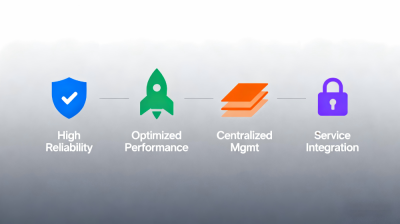
Q: In complex microservice architectures, how do Traffic Management and Microservice Observability in the service mesh TCM work together, and what additional safeguards does the Cloud-Native Service Mesh offer for Microservice Governance?
A: In complex microservice architectures, Traffic Management and Microservice Observability in the service mesh TCM form an efficient synergy: Traffic Management controls the distribution of microservice traffic through strategies such as canary releases and feature routing, while Microservice Observability collects real-time operational data from this traffic, providing feedback on the effectiveness of traffic strategies. This helps operations personnel promptly adjust configurations such as routing rules and rate-limiting thresholds. When anomalies occur in microservice communication, Microservice Observability quickly identifies the faulty links, and Traffic Management can switch traffic to healthy nodes through mechanisms like fault-aware scheduling and automated failover, ensuring service continuity. The Cloud-Native Service Mesh offers key safeguards for Microservice Governance: As a practical implementation of a Cloud-Native Service Mesh, the service mesh TCM is 100% compatible with the native Istio ecosystem, ensuring compatibility and extensibility in microservice governance. Its fully managed service model reduces the operational costs of the mesh, allowing enterprises to focus on Microservice Governance itself. Its networking capabilities across clusters and regions support Microservice Governance in distributed high-availability architectures, enabling multi-cluster traffic scheduling and disaster recovery management. This ensures efficient and controllable microservice governance even in complex deployment scenarios.