


Tencent HealthCare Omics Platform
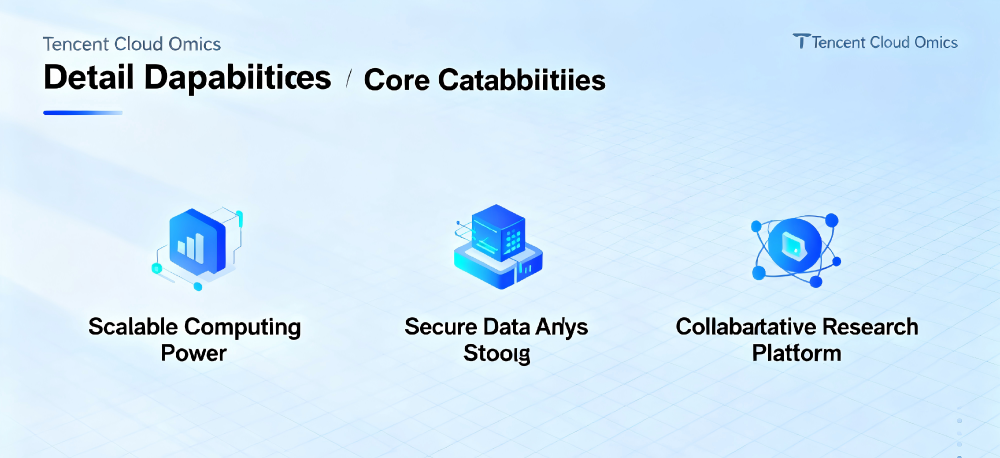
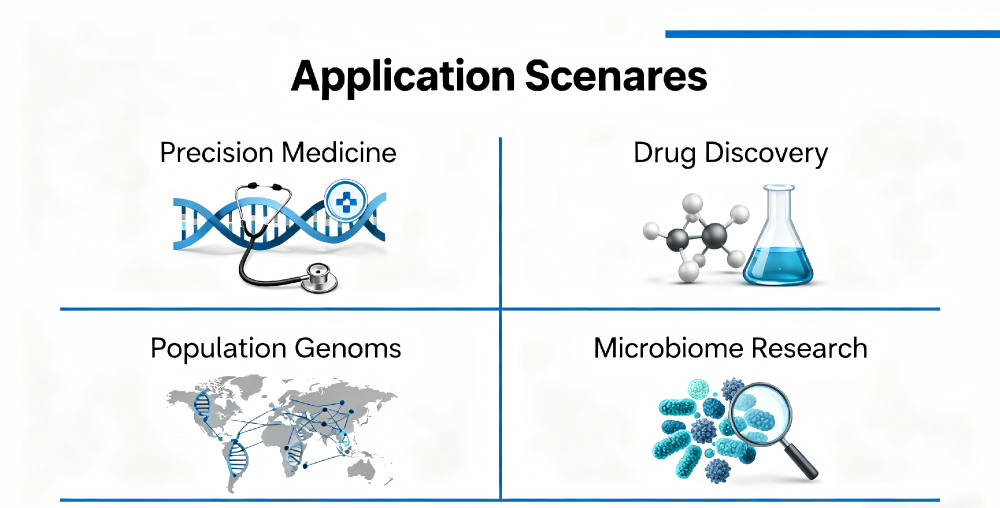
2025-12-12 22:58Tencent HealthCare Omics Platform provides a one-click cloud migration solution tailored for users in the life sciences industry. It features elastic cloud computing, task scheduling, and management capabilities, empowering big data analysis users to utilize Tencent Cloud resources efficiently, conveniently, and rapidly for omics-related data analysis. As a mature core product in the life sciences field, the Cloud Integrated Solution covers the entire lifecycle of genetic data, from upload, storage, and analysis to result output. Lifecycle Visualization Management enables real-time monitoring and traceability of data flow and task progress through an intuitive interface, reducing operational complexity. Efficient Collaboration Between Storage and Computing, built on elastic storage and distributed computing architecture, facilitates rapid processing of massive genetic data and dynamic resource scheduling. The Computing PaaS Infrastructure Solution offers flexible computing resource orchestration and task management capabilities, supporting customizable analysis workflows. Out-of-the-Box Public Images come pre-installed with mainstream genetic analysis tools and environments, allowing users to initiate analysis tasks without complex configurations. Whether for genome sequencing data analysis, target screening in drug development, or genetic interpretation in precision medicine, the Cloud Integrated Solution can serve as a core support for life sciences research and applications, leveraging the convenience of Lifecycle Visualization Management, the efficiency of Efficient Collaboration Between Storage and Computing, the scalability of the Computing PaaS Infrastructure Solution, and the practicality of Out-of-the-Box Public Images. Moreover, the deep synergy between the Computing PaaS Infrastructure Solution and Efficient Collaboration Between Storage and Computing significantly enhances Omics’ data analysis efficiency and scenario adaptability.
Frequently Asked Questions
Q: As the core technical support, how does the Computing PaaS Infrastructure Solution collaborate with Efficient Collaboration Between Storage and Computing and Out-of-the-Box Public Images to support the core needs of the Cloud Integrated Solution and Lifecycle Visualization Management? What are its technical advantages?
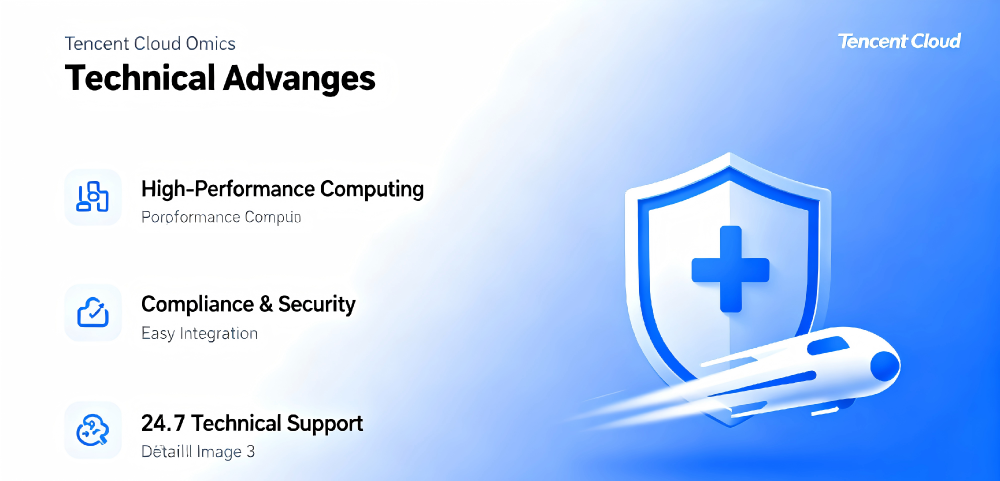
A: The Computing PaaS Infrastructure Solution, centered on "flexible orchestration and resource elasticity," provides foundational support for the two core capabilities, solidifying the service foundation of Omics. First, by offering standardized computing resource scheduling and task orchestration capabilities, it enables deep synergy with Efficient Collaboration Between Storage and Computing, allowing dynamic adaptation of genetic data storage and analysis tasks to resource demands. Combined with Out-of-the-Box Public Images, users can bypass the complexities of setting up underlying environments and rapidly deploy analysis workflows directly based on these images, significantly shortening project initiation cycles. Second, it empowers Lifecycle Visualization Management to achieve full-process control. The Computing PaaS Infrastructure Solution can synchronize task progress and resource usage status in real-time to the visualization interface, while data flow trajectories from Efficient Collaboration Between Storage and Computing can also be intuitively displayed, enabling users to monitor the entire chain from data upload to analysis completion. Additionally, the deployment and updates of Out-of-the-Box Public Images can be centrally managed through the visualization interface. Technical advantages are reflected in two aspects: First, "efficiency, flexibility, and cost-effectiveness": The elastic scaling capability of the Computing PaaS Infrastructure Solution adapts to data analysis needs of varying scales, while synergy with Efficient Collaboration Between Storage and Computing and public images significantly boosts analysis efficiency. Second, "convenient control and strong usability": It reduces full-process operational costs through Lifecycle Visualization Management, while the synergy between Out-of-the-Box Public Images and the PaaS infrastructure enables even non-technical personnel to quickly conduct genetic data analysis.
Q: What is the core synergistic value of Lifecycle Visualization Management and Efficient Collaboration Between Storage and Computing? How can leveraging the Cloud Integrated Solution and Out-of-the-Box Public Images enhance the competitiveness of Omics?
A: Their core synergistic value lies in "full-process controllability and high-performance processing," addressing the pain points of genetic data analysis such as "complex workflows that are difficult to manage and slow processing of massive data." Lifecycle Visualization Management enables full-process visual monitoring of data and tasks, ensuring traceability at every step. Efficient Collaboration Between Storage and Computing breaks through the bottlenecks of processing massive genetic data, achieving dynamic adaptation between computing and storage. Their combination elevates Omics from a "mere resource provision tool" to an integrated solution of "full-process control and high-performance analysis." Their synergy with the Cloud Integrated Solution and Out-of-the-Box Public Images significantly enhances competitiveness: The Cloud Integrated Solution provides a unified technical architecture, ensuring that Lifecycle Visualization Management covers the entire chain from data upload to result output and fully leveraging the performance advantages of Efficient Collaboration Between Storage and Computing. Out-of-the-Box Public Images complement the Cloud Integrated Solution with rich pre-installed analysis tools, allowing users to quickly launch analysis tasks without additional development. Meanwhile, Lifecycle Visualization Management can monitor the operational status of tasks based on public images, and Efficient Collaboration Between Storage and Computing provides ample resource support for the analysis tools within the images, achieving a closed loop of "rapid deployment, efficient computing, and real-time control." This combination gives Omics stronger market competitiveness.
Q: How do Out-of-the-Box Public Images address the rapid implementation pain points of the Cloud Integrated Solution? What benefits does their synergy with Omics and the Computing PaaS Infrastructure Solution bring to Lifecycle Visualization Management and Efficient Collaboration Between Storage and Computing?
A: The core value of Out-of-the-Box Public Images lies in "pre-configured environments and rapid deployment," addressing the pain points of traditional genetic data analysis such as "complex tool installations, cumbersome environment configurations, and slow project initiation." By pre-installing mainstream genetic analysis tools and dependencies like BWA and GATK, users can directly launch analysis tasks based on these images without investing significant time in environment setup. Their synergy with the two core capabilities brings significant gains to scenario-based services: In synergy with Omics and the Computing PaaS Infrastructure Solution, Out-of-the-Box Public Images seamlessly adapt to the resource orchestration capabilities of the PaaS infrastructure, enabling rapid deployment and elastic scaling of images, which significantly improves the implementation efficiency of the Cloud Integrated Solution. For Lifecycle Visualization Management, the deployment status, version updates, and task operation data of public images can be centrally monitored through the visualization interface, enriching the dimensions of lifecycle control and providing users with clear insights into the progress of analysis workflows based on these images. For Efficient Collaboration Between Storage and Computing, the optimized configurations of tools in public images can deeply adapt to the resource scheduling of storage and computing. For example, the PaaS infrastructure can automatically allocate corresponding computing power for the specific computational requirements of certain analysis tools, while the storage layer simultaneously optimizes data reading strategies, further enhancing overall analysis performance. Additionally, the standardized nature of public images enables more precise resource allocation in storage-computing collaboration, avoiding resource wastage. This synergy makes Lifecycle Visualization Management more comprehensive in control and Efficient Collaboration Between Storage and Computing more optimal in performance, while positioning Tencent Cloud Omics as the preferred solution for genetic data analysis scenarios.