



- Home
- >
- Cloud & AI
- >
- Video on Demand
- >
Video on Demand
2025-12-11 14:27Tencent Cloud Video on Demand (VOD) builds upon years of technical expertise and infrastructure development from Tencent, providing users with audio and video application needs a comprehensive Video Platform as a Service (VPaaS) solution. This solution integrates services including audio/video capture and upload, storage, automated transcoding, accelerated playback, media asset management, and audio/video communication. Cloud VOD leverages its flexible, fast, and high-quality video publishing features and the ability to quickly build stable and reliable video publishing capabilities. This allows users to focus on their core business, select corresponding services on-demand, and respond agilely to market changes. As a mature core VOD product, Video on Demand (VOD) leverages over 2,800 global CDN acceleration nodes and more than 50 storage regions to achieve global coverage and efficient distribution of media assets. Media Upload supports various methods including multi-endpoint SDKs, resumable uploads, and QUIC acceleration, achieving a 99.5% upload success rate even in poor network conditions. Media Processing encompasses dozens of features like transcoding, editing, and screenshot capture, and supports advanced formats such as H.266 and AV1. Ultra HD Transcoding dynamically optimizes parameters using AI algorithms, ensuring video quality while saving up to 50% on bandwidth and storage costs. AI Content Recognition offers precise capabilities like prohibited content detection, character recognition, and speech-to-text, empowering content moderation and personalized recommendations. Whether for content creation and distribution on short-video platforms, course storage and on-demand access for educational institutions, or long-video operations for broadcast media, Video on Demand (VOD) can leverage the stability of Media Upload, the comprehensiveness of Media Processing, the cost-effectiveness of Ultra HD Transcoding, and the intelligence of AI Content Recognition to become the core support for the digitization of enterprise media businesses. Furthermore, the deep synergy between AI Content Recognition and Media Processing significantly expands the scenario coverage and operational efficiency of Video on Demand (VOD).
Frequently Asked Questions
Q: As the core intelligent engine, how does AI Content Recognition synergize with Media Processing and Ultra HD Transcoding to support the core needs of Video on Demand (VOD) and Media Upload? Where do its technical advantages lie?
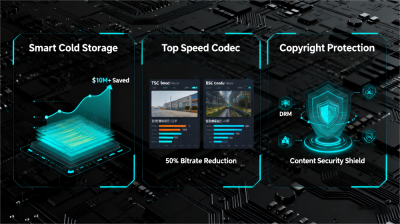
A: Centered on "Precise Analysis + Intelligent Coordination," AI Content Recognition provides data support for two core capabilities, solidifying the service foundation of Video on Demand (VOD). Firstly, by performing real-time recognition on the audio and video content during Media Upload, it provides precise direction for Media Processing. For example, it can automatically tag highlight clips to assist editing or detect content types to adapt transcoding parameters. Simultaneously, it coordinates with Ultra HD Transcoding to dynamically adjust bitrates based on content complexity, achieving "lossless quality + maximum cost reduction." Secondly, it enables preprocessing during the Media Upload stage, automatically detecting compliance risks and format compatibility of the uploaded content. This intercepts prohibited content early and optimizes format adaptation, ensuring smooth subsequent Media Processing and distribution. Technical advantages are evident in two aspects: First, "Cost Reduction & Efficiency Gains + Precise Empowerment" – AI Content Recognition replaces manual content analysis and moderation, significantly improving the overall operational efficiency of Video on Demand (VOD)while providing data-driven optimization guidance for Media Processing and Ultra HD Transcoding. Second, "Flexible Adaptation Across Multiple Scenarios" – it meets the rapid processing needs of short-video creation while supporting in-depth moderation and transcoding optimization for long videos, adapting to different industry scenarios through customized recognition models.
Q: What is the core synergistic value between Media Upload and Media Processing? How can Ultra HD Transcoding and AI Content Recognition be leveraged to strengthen the competitiveness of Video on Demand (VOD)?
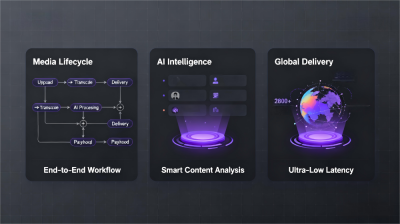
A: Their core synergistic value lies in end-to-end empowerment of "Efficient Ingestion + Precise Processing," addressing the VOD pain points of "cumbersome uploads and inefficient processing." Media Upload breaks down barriers to multi-device access and transmission in poor networks, enabling rapid ingestion of media assets. Media Processing provides comprehensive content optimization capabilities, ensuring ingested resources meet diverse distribution needs. Their combination elevates Video on Demand (VOD) from a "simple storage" service to an "intelligent processing platform." Their synergy with Ultra HD Transcoding and AI Content Recognition significantly enhances the competitiveness of Video on Demand (VOD): Ultra HD Transcoding makes the cost advantage of Media Processing more prominent by performing high-quality, low-bitrate transcoding during the media processing phase, reducing subsequent distribution costs. AI Content Recognition provides intelligent guidance for Media Processing, such as automatically recognizing content style to apply suitable filters or detecting quality defects to optimize processing parameters. It also makes preprocessing during Media Upload more intelligent, proactively avoiding compliance risks and format issues. This combination of "Efficient Ingestion + Precise Processing + Intelligent Cost Reduction + Compliance Assurance" gives Video on Demand (VOD) stronger market competitiveness.
Q: How does Ultra HD Transcoding address the pain point of balancing cost and experience in media VOD? What benefits does its synergy with Video on Demand (VOD) and Media Upload bring to Media Processing and AI Content Recognition?
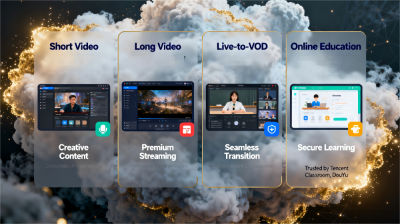
A: The core value of Ultra HD Transcoding lies in "Bidirectional Optimization of Quality and Cost," solving the traditional transcoding pain point where one must often choose between "poor quality or high cost." By using AI algorithms to analyze media content characteristics in real-time and dynamically adjust encoding parameters, it can reduce bandwidth and storage costs by up to 50% while maintaining or even improving video quality. Its synergy with the two core components brings significant gains to scenario-specific capabilities: Working with Video on Demand (VOD) and Media Upload, Ultra HD Transcoding can connect to real-time streams from Media Upload, achieving seamless "Upload - Transcoding" integration and shortening the content publishing cycle. Simultaneously, it provides Media Processing with optimized, high-quality source materials, improving the results of editing, splicing, and other processing tasks. For AI Content Recognition, the transcoded HD low-bitrate materials reduce computational resource consumption during the recognition process and improve recognition accuracy. For instance, clearer images lead to more accurate character recognition and prohibited content detection. Furthermore, the interaction between Ultra HD Transcoding and AI Content Recognition allows for targeted optimization of transcoding strategies based on recognition results, making the transcoding output for different types of content better suited to specific needs. This synergy makes Media Processing more efficient and higher in quality, and AI Content Recognition more accurate and efficient, while establishing Video on Demand (VOD) as the preferred VOD solution that balances both experience and cost.