


Tencent Cloud Organizations
2025-12-12 17:45Tencent Cloud Organizations (TCO) is a permission-based multi-account management service primarily focused on enterprise multi-account governance needs. It enables Multi-Account Centralized Management by integrating multiple Tencent Cloud accounts into a single organization account, facilitating unified control—perfectly tailored for account management scenarios involving enterprises and their subsidiaries. The product supports account categorization, allowing accounts with different responsibilities to be assigned to corresponding organizational units. Coupled with the Account Invitation and Management API, it enables easy creation and invitation of accounts to join the organization. Additionally, upcoming features will include Granular Cloud Resource Control, which centrally restricts member accounts' usage scopes of cloud products through service control policies. In terms of core value, TCO not only provides organizational administrators with a global perspective to monitor account inventory and usage but also enables Unified Resource Control for Subsidiaries, meeting enterprise budgeting, security, and compliance requirements—all at no cost. Multi-Account Centralized Management forms the foundational architecture of the product, Enterprise Multi-Account Governance is its core application scenario, the Account Invitation and Management API offers efficient operational support, and Granular Cloud Resource Control and Unified Resource Control for Subsidiaries precisely address the key pain points of enterprise multi-account management.
Frequently Asked Questions
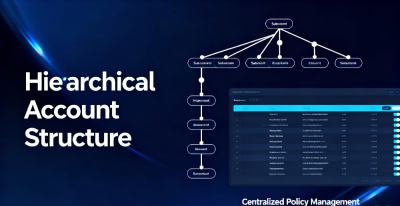
Q: How does Tencent Cloud TCO assist Enterprise Multi-Account Governance through Multi-Account Centralized Management, and what role does the Account Invitation and Management API play?
A: Tencent Cloud TCO uses Multi-Account Centralized Management as its core capability to provide comprehensive support for Enterprise Multi-Account Governance: It supports consolidating all Tencent Cloud accounts within an organization under a unified organization account. Through account categorization, organizational units can be divided by dimensions such as business departments or subsidiaries, making account management more structured and meeting the standardization requirements of Enterprise Multi-Account Governance. Additionally, the upcoming feature for viewing multi-account bills will help administrators uniformly monitor the costs of each account, further enhancing the enterprise multi-account governance system. The Account Invitation and Management API is a key tool for Multi-Account Centralized Management: This API allows rapid creation of new accounts and their addition to corresponding groups within the organization, as well as convenient invitations for existing accounts to join. It enables batch management and efficient integration of multiple accounts, significantly reducing the operational costs of Enterprise Multi-Account Governance. Moreover, policies attached to groups are automatically applied to newly added accounts, making the implementation of Multi-Account Centralized Management rules more efficient and promoting greater scalability and standardization in Enterprise Multi-Account Governance.
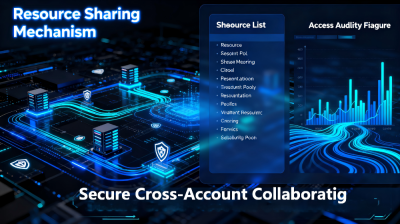
Q: How does the upcoming Granular Cloud Resource Control feature of Tencent Cloud TCO support Unified Resource Control for Subsidiaries, and what is its relationship with Multi-Account Centralized Management?
A: The upcoming Granular Cloud Resource Control feature of Tencent Cloud TCO will enable Unified Resource Control for Subsidiaries through service control policies: It will allow centralized rule-setting to restrict subsidiary accounts' usage scopes of Tencent Cloud products. For example, it may permit only the use of CVM services, ensuring that subsidiary resource usage complies with organizational standards and preventing resource misuse or unauthorized usage. This feature is deeply integrated with Multi-Account Centralized Management: Multi-Account Centralized Management provides the administrative framework for Granular Cloud Resource Control. Only by incorporating subsidiary accounts into the organization’s Multi-Account Centralized Management system can unified policies achieve cross-account control of cloud resources. Conversely, Granular Cloud Resource Control represents a core extension of Multi-Account Centralized Management, elevating it from “account consolidation” to “resource control.” This further strengthens the effectiveness of Unified Resource Control for Subsidiaries, meeting enterprise requirements for security and compliance in multi-account resource usage.
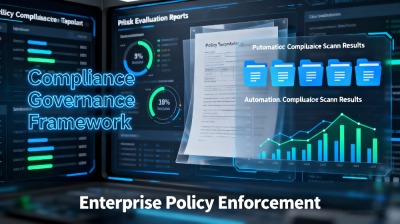
Q: In Enterprise Multi-Account Governance scenarios, how do Unified Resource Control for Subsidiaries and the Account Invitation and Management API in Tencent Cloud TCO collaborate, and what additional safeguards does Multi-Account Centralized Management provide?
A: In Enterprise Multi-AAccount Governance scenarios, the collaboration between Unified Resource Control for Subsidiaries and the Account Invitation and Management API is both efficient and precise: Through the Account Invitation and Management API, subsidiary accounts can be quickly invited to join the corresponding organizational units within the organization account, achieving integration at the account level. Subsequently, leveraging Unified Resource Control for Subsidiaries, differentiated cloud resource usage policies can be configured based on the business needs of different subsidiaries, enabling end-to-end governance of “account integration + resource control.” Multi-Account Centralized Management provides core safeguards for this collaboration: On one hand, the unified organization account structure makes operations via the Account Invitation and Management API more targeted, allowing batch management of accounts by subsidiary dimensions. On the other hand, the global perspective offered by Multi-Account Centralized Management enables administrators to monitor subsidiary account resource usage in real-time, ensuring the effective implementation of Unified Resource Control for Subsidiaries policies. Coupled with account categorization, this results in clearer hierarchical structures and more precise control in Enterprise Multi-Account Governance, fully unlocking the value of Multi-Account Centralized Management.