


Tencent Kubernetes Engine
2025-12-12 15:52Container Service (Tencent Kubernetes Engine, TKE) is a high-performance container management service based on native Kubernetes, with containers at its core and high scalability. TKE is fully compatible with the native Kubernetes API and extends Kubernetes plugins such as Tencent Cloud's Cloud Block Storage (CBS) and Cloud Load Balancer (CLB). It provides a comprehensive set of features for containerized applications, including efficient deployment, resource scheduling, service discovery, and dynamic scaling. TKE addresses environment consistency issues during development, testing, and operations, improves the ease of managing large-scale container clusters, helps users reduce costs, and enhances efficiency. Container Service is free to use, while other related cloud products are billed separately. TKE supports open-source ecosystems, adapts to Tencent Cloud's fundamental IaaS capabilities, and enables one-click deployment of various open-source applications. It offers secure and reliable features, such as dedicated computing resources and operation within a private network, along with automatic fault recovery and secure data storage. TKE is also user-friendly, efficient in deployment, flexible in scaling, and cost-effective, excelling in scenarios such as microservice architecture, continuous integration and delivery, and elastic scaling.
Among these, Micro-service Architecture, as one of the core application scenarios, facilitates the decomposition and efficient management of complex applications. Image Management ensures secure and efficient retrieval and storage of images. Load Balancer Integration achieves rational traffic distribution and service stability. Secure Operation is the core guarantee for continuous service reliability, while Efficient Operation and Maintenance Service provides strong support for users to promptly respond to service status.
Frequently Asked Questions
Q: What advantages does Tencent Cloud Container Service (TKE) offer in micro-service architecture scenarios, and how does it ensure the secure operation of microservices?
A: In micro-service architecture scenarios, Tencent Cloud Container Service (TKE) supports splitting monolithic applications into manageable microservices. Each microservice is managed through Docker images, and different microservices can be independently developed, deployed, and scaled by different teams using various technologies. This significantly reduces development and maintenance costs and simplifies business adaptation. To ensure the secure operation of microservices, TKE runs containers on dedicated cloud server instances with exclusive computing resources. Clusters are deployed in private networks and support custom security groups and network ACLs. Additionally, abnormal containers can automatically recover, and containers within services can be quickly migrated across regions. Stateful service data also supports multiple persistent storage methods, providing comprehensive protection for microservice operation and data security. The flexibility of micro-service architecture, combined with the secure operation mechanisms provided by TKE, makes the deployment and operation of complex applications more reliable.
Q: What functionalities does Tencent Cloud Container Service (TKE) include in Image Management, and what role does Load Balancer Integration play in service deployment and scaling?
A: Tencent Cloud Container Service (TKE)'s Image Management covers both Docker Hub official image management and private image management. Official images are regularly synchronized and support accelerated downloads, while private images are stored in secure and reliable repositories. These repositories enable fast uploads and downloads within internal networks and access from external networks across all regions. The efficiency and security of Image Management lay a solid foundation for application deployment.
Load Balancer Integration is one of TKE's core capabilities. During service deployment, it supports accessing services via load balancer domain names or service names with ports, avoiding impacts caused by IP changes due to backend service modifications. During service scaling, Load Balancer Integration distributes traffic reasonably across multiple containers and automatically recovers containers with poor performance, ensuring the number of containers meets business demands. Coupled with the flexible horizontal scaling of services, it enables businesses to confidently handle rapid changes. The synergy between Load Balancer Integration and Image Management significantly improves the efficiency and stability of service deployment and scaling.
Q: How does Tencent Cloud Container Service (TKE) enhance management efficiency through Efficient Operation and Maintenance Service, and how are its advantages reflected in a micro-service architecture?
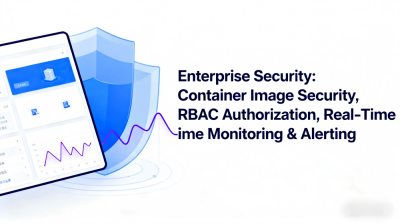
A: Tencent Cloud Container Service (TKE)'s Efficient Operation and Maintenance Service offers rich monitoring data, helping users quickly analyze service health and respond promptly. It also supports custom monitoring alerts, enabling users to obtain real-time service status information, significantly reducing operational difficulty and response times. In a micro-service architecture, where applications are split into multiple independent microservices, the operational needs for each microservice become more granular, making the advantages of Efficient Operation and Maintenance Service even more pronounced. Through comprehensive monitoring data, users can precisely grasp the operational status of each microservice. Custom alerts allow timely detection and resolution of anomalies in individual microservices, preventing impacts on the overall application. Combined with the independent deployment and scaling characteristics of micro-service architecture, Efficient Operation and Maintenance Service can target individual microservices for operational actions without disrupting other services, making the management of micro-service architecture more efficient and precise. The compatibility between Efficient Operation and Maintenance Service and micro-service architecture further unleashes the management value of Container Service.