



Virtual Private Cloud
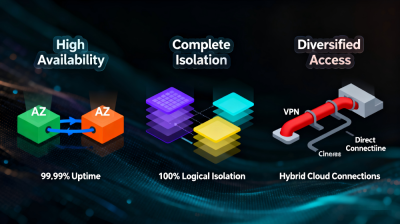
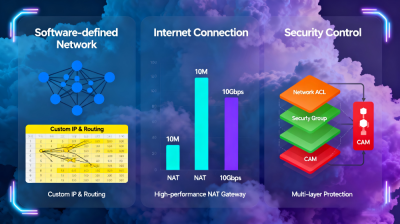
2025-12-11 16:10Virtual Private Cloud (VPC) is a dedicated cloud-based network space built on Tencent Cloud, providing network services for your resources on Tencent Cloud. Different VPCs are completely logically isolated. As your exclusive network space in the cloud, you can manage your VPC using software-defined networking, configuring functions such as IP addresses, subnets, route tables, network ACLs, and flow logs. VPC also supports multiple methods for connecting to the Internet, such as Elastic IPs and NAT Gateways, and offers various billing methods and bandwidth packages to help you save costs. Simultaneously, you can connect Tencent Cloud with your on-premises data centers via VPN Connections or Direct Connect, flexibly building a hybrid cloud. As a mature core cloud networking product, Virtual Private Cloud (VPC) creates a dedicated network space through logical isolation technology and supports full-dimensional configuration via software-defined networking. Subnet Division allows splitting the network on-demand, enabling layered deployment of applications and services and improving resource management efficiency. Security Groups, acting as stateful virtual firewalls, precisely control inbound and outbound traffic at the instance level, ensuring business security. NAT Gateways support tens of millions of concurrent connections and ultra-large bandwidth, meeting the needs of resources within a VPC to efficiently access the public internet. VPN Connections enable secure communication between on-premises data centers and cloud resources via encrypted tunnels, allowing flexible construction of hybrid cloud architectures. Whether for deploying cloud-based enterprise services, enabling cross-region resource communication, building hybrid clouds, or providing network support for high-concurrency services, Virtual Private Cloud (VPC) can leverage the flexibility of Subnet Division, the reliability of Security Groups, the high performance of NAT Gateways, and the convenience of VPN Connections to become the core networking support for enterprise digital transformation. Furthermore, the deep synergy between Security Groups and NAT Gateways significantly enhances the security protection and access efficiency of Virtual Private Cloud (VPC).
Frequently Asked Questions
Q: As a core security protection tool, how do Security Groups synergize with Subnet Division and NAT Gateways to support the core needs of Virtual Private Cloud (VPC) and VPN Connections? Where are their technical advantages reflected?
A: Centered on "Instance-level Protection + Precise Control," Security Groups provide security support for two core capabilities, solidifying the service foundation of Virtual Private Cloud (VPC). Firstly, synergizing with Subnet Division, they allow setting differentiated Security Group rules for businesses deployed in different subnets. For example, specific ports can be opened for application subnets while access to data subnets is strictly restricted, achieving layered protection. Simultaneously, working with NAT Gateways, they filter inbound and outbound traffic through Security Groups while ensuring resources within the VPC can access the public internet, preventing malicious attacks and forming a dual guarantee of "access channel + security barrier." Secondly, they empower hybrid cloud scenarios involving VPN Connections. Security Groups limit the scope of communication between on-premises data centers and cloud resources, opening only necessary service ports to ensure data transmission security within the encrypted tunnel. Additionally, the stateful inspection characteristic of Security Groups allows dynamic adaptation to network fluctuations in VPN Connections, ensuring uninterrupted protection. Technical advantages are evident in two aspects: First, "Precise & Flexible + Comprehensive Protection" – Security Groups can be configured down to the protocol and port level, adapting to the layered deployment needs of Subnet Division while addressing the scenario-specific security requirements of NAT Gateways and VPN Connections. Second, "Easy to Use & Efficient + No Performance Overhead" – they enable real-time instance-level protection without requiring additional hardware deployment, and do not affect the overall access performance of Virtual Private Cloud (VPC).
Q: What is the core synergistic value between Subnet Division and VPN Connections? How can Security Groups and NAT Gateways be leveraged to strengthen the competitiveness of Virtual Private Cloud (VPC)?
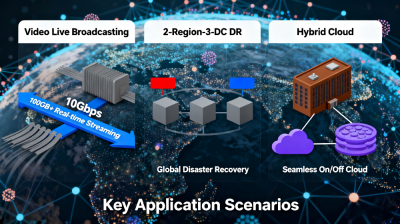
A: Their core synergistic value lies in providing "Flexible Deployment + Cross-domain Communication" covering all scenarios, addressing the enterprise networking pain points of "inflexible deployment and isolation between on-premises and cloud." Subnet Division enables layered deployment and fine-grained management of resources within a Virtual Private Cloud (VPC), meeting the networking needs of different businesses. VPN Connections break geographical barriers between on-premises and cloud, enabling seamless communication between local data centers and cloud resources. Their combination elevates Virtual Private Cloud (VPC) from a "single cloud network" to an "elastic network with cloud-edge synergy." Their synergy with Security Groups and NAT Gateways significantly enhances the competitiveness of Virtual Private Cloud (VPC): Security Groups provide precise protection for the layered deployment enabled by Subnet Division, preventing security risks from spreading between different subnets. NAT Gateways provide high-performance public internet access channels for resources within subnets, while working with Security Groups to filter public traffic, ensuring secure access. For VPN Connections, Security Groups can limit the scope of business for cross-domain communication, while NAT Gateways can meet the elastic demands for public internet access within hybrid cloud architectures. This makes the networking capabilities of Virtual Private Cloud (VPC) more comprehensive and secure. This combination of "Flexible Deployment + Cross-domain Communication + Precise Protection + Efficient Access" gives Virtual Private Cloud (VPC) stronger market competitiveness.
Q: How does a NAT Gateway address the public internet access pain points of Virtual Private Cloud (VPC)? What benefits does its synergy with Virtual Private Cloud (VPC) and Subnet Division bring to Security Groups and VPN Connections?
A: The core value of a NAT Gateway lies in "Efficient Translation + Secure Access," solving the traditional virtual network pain points of "insufficient public IPs and exposure of internal network resources." Through IP address translation, it allows multiple resources within a subnet to share Elastic IPs to access the public internet while hiding internal IPs, reducing security risks. It supports tens of millions of concurrent connections and ultra-large bandwidth, meeting high-traffic business demands. Its synergy with the two core components brings significant gains to scenario-specific capabilities: Working with Virtual Private Cloud (VPC) and Subnet Division, NAT Gateways can be flexibly configured based on subnet deployment needs. For example, high-bandwidth NAT Gateways can be assigned to business subnets, while standard NAT Gateways can be configured for management subnets, achieving on-demand resource allocation. For Security Groups, the IP translation function of NAT Gateways allows Security Group rules to focus on internal instances, eliminating the need for frequent adjustments to public IP-related policies and simplifying protection configuration. For VPN Connections, NAT Gateways can work in tandem with VPN Connections, enabling parallel public internet access and cross-domain communication within hybrid cloud architectures. For instance, on-premises data centers can access cloud resources via VPN Connections, while cloud subnets access the public internet via NAT Gateways, with the two not interfering with each other, enhancing the flexibility of network architecture. This synergy makes the protection configuration of Security Groups more streamlined, the hybrid cloud networking of VPN Connections more efficient, and the public internet access capabilities of Virtual Private Cloud (VPC) better aligned with enterprise business needs.