


Tencent Kubernetes Engine for Serverless
2025-12-12 15:58Tencent Cloud Serverless Container Service (Tencent Kubernetes Engine for Serverless) is a secure, stable, elastic, and cost-effective serverless Kubernetes service. As a fully managed container service, it eliminates the need for users to purchase or manage compute nodes, delivering computing resources in the form of Pods. It is compatible with native Kubernetes, supports purchasing and managing resources in native ways, and extends integration with Tencent Cloud's storage, networking, load balancing, and other products for out-of-the-box usability. This service offers significant advantages: built on Tencent Cloud's mature virtualization technology and network architecture, it provides 99.95% service availability while ensuring secure isolation between users' container service clusters. Through proprietary lightweight virtualization technology, it achieves second-level scaling and supports automatic scaling based on Kubernetes' native HPA, precisely matching business workload demands. The serverless model delivers higher resource utilization and lower operational costs, and it integrates seamlessly with most Tencent Cloud services, meeting the needs of various business scenarios. In terms of functionality, its Multi-Cluster Management capability supports cluster-style management, multiple Kubernetes versions, and cross-availability zone deployment scheduling, greatly simplifying operations. For Rapid Application Deployment, it supports quick deployment and updates via images, YAML, or templates, and enables microservices, making application deployment more efficient and flexible. Whether for the core features of a Serverless Kubernetes Service, the convenience of a Fully Managed Container Service, or the robust support of Multi-Cluster Management, Security Isolation, and Rapid Application Deployment, this service stands as an excellent choice for enterprise digital transformation.
Frequently Asked Questions
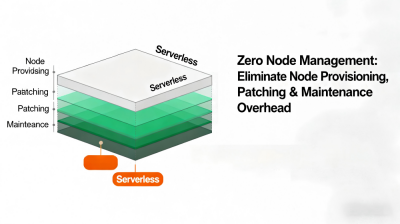
Q: As a Serverless Kubernetes Service and Fully Managed Container Service, what core capabilities does Tencent Cloud Serverless Container Service offer in Multi-Cluster Management, and what benefits does it bring to users?
A: Tencent Cloud Serverless Container Service, as a typical Serverless Kubernetes Service with the attributes of a Fully Managed Container Service, excels in Multi-Cluster Management. It supports cluster-style management, is compatible with multiple Kubernetes versions, and employs a fully managed model where all nodes require no user management, significantly reducing operational burdens. Additionally, clusters are compatible with native management methods, allowing workloads within clusters to be deployed across availability zones and containers to be scheduled across availability zones, enhancing application availability and disaster recovery capabilities. For users, Multi-Cluster Management makes complex cluster resource scheduling more efficient, freeing them from the heavy workload of maintaining cluster nodes so they can focus on business needs. The Multi-Cluster Management feature of cross-availability zone deployment and scheduling ensures stable business operations under extreme conditions. The combination of a Serverless Kubernetes Service and a Fully Managed Container Service further enhances the flexibility and convenience of Multi-Cluster Management, significantly lowering cluster operational costs.
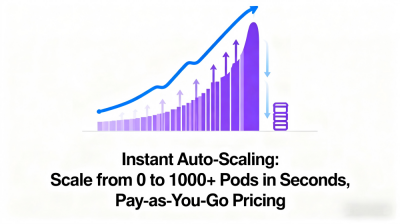
Q: How does Tencent Cloud Serverless Container Service ensure Security Isolation, and what role does this Security Isolation play in the Rapid Application Deployment process?
A: Tencent Cloud Serverless Container Service places high importance on Security Isolation. As a Serverless Kubernetes Service, it leverages Tencent Cloud's mature virtualization technology and network architecture to achieve virtualization isolation and network isolation between users' container service clusters. Simultaneously, it supports users in configuring network policies for specific services using products like security groups and network ACLs, building a multi-dimensional security defense to ensure that business data and resources of different users do not interfere with each other. In the Rapid Application Deployment process, Security Isolation plays a crucial role: On one hand, whether deploying applications via images, YAML, or templates, Security Isolation prevents risks such as resource contention or data leakage during deployment, ensuring a clean deployment environment. On the other hand, in microservices-enabled deployment scenarios, when multiple microservices are deployed in the same cluster, Security Isolation enables independent operation between microservices, preventing issues in one microservice from affecting others and making post-deployment application operations more stable and reliable. Security Isolation is a vital safeguard for application deployment security and one of the core advantages of this service as a Serverless Kubernetes Service.
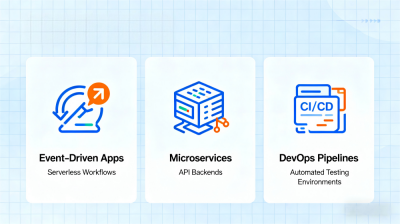
Q: As a Fully Managed Container Service, what convenient features does Tencent Cloud Serverless Container Service offer in Rapid Application Deployment, and how do these features and the attributes of a Serverless Kubernetes Service mutually support each other?
A: As a Fully Managed Container Service, Tencent Cloud Serverless Container Service offers numerous convenient features in Rapid Application Deployment: It supports quick deployment or updates of applications via images, YAML, or templates, ensuring simple and efficient operations. It enables microservices deployment, reducing code maintenance costs and better adapting to rapidly changing business needs. It also supports rolling upgrades, allowing application updates without interrupting business operations, ensuring business continuity. These Rapid Application Deployment features are deeply aligned with and mutually supportive of the attributes of a Serverless Kubernetes Service: The no-node-management characteristic of a Serverless Kubernetes Service eliminates the need to consider node resource allocation and maintenance during application deployment, further simplifying the deployment process. Its second-level scaling capability automatically adjusts resources based on business workloads after deployment, meeting resource needs at different stages of the application. Meanwhile, the attributes of a Fully Managed Container Service provide stable underlying support for application deployment, ensuring a smooth deployment process and reliable post-deployment operation. The convenience of Rapid Application Deployment, combined with the elasticity and efficiency of a Serverless Kubernetes Service, enables this service to better meet the fast-iterating business needs of enterprises while highlighting the core value of a Fully Managed Container Service.